A healthy lawn needs more than sunlight, water, and fertilizer. Grass roots also need access to air, moisture, and nutrients beneath the surface. When soil becomes compacted, those essential resources have difficulty reaching the root system.
Professional soil aeration from Corliss Landscape and Irrigation can relieve compaction, encourage stronger roots, and help your lawn grow thicker and healthier.
What Is Soil Aeration?
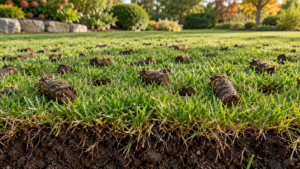
Soil aeration is the process of creating small openings in the lawn so air, water, and nutrients can move more easily into the soil. Core aeration accomplishes this by removing small plugs of soil and thatch from the ground.
These openings reduce compaction and give grass roots more room to grow. The soil plugs left on the lawn gradually break down and return beneficial organic material to the soil.

Why Does Lawn Soil Become Compacted?
Soil particles are naturally pressed together over time. Heavy foot traffic, lawn equipment, outdoor activities, construction, and certain soil types can make compaction worse. Compacted soil can prevent water and nutrients from reaching the root zone. It may also limit root growth and contribute to runoff, puddling, thin grass, and bare areas.
Your lawn may benefit from aeration if you notice:
- Thin or patchy grass
- Hard, dense soil
- Standing water after rain or irrigation
- Excessive water runoff
- Heavy thatch buildup
- Slow growth despite regular fertilization
- Areas that receive frequent foot traffic
All these benefits from aeration is why you should performa soil aeration your lawn consistently or hire a professional lawn care company to do it for you.
The Benefits of Soil Aeration
Improved Airflow to the Roots
Grass roots need oxygen to grow and function properly. Aeration opens the soil and improves airflow around the root zone, creating better growing conditions beneath the surface.
Better Water Absorption
Compacted soil can cause irrigation and rainwater to run across the surface instead of soaking into the ground. Aeration helps water penetrate the soil so it can reach the roots where it is needed.
More Effective Fertilization
Fertilizer is most useful when its nutrients can reach the root system. Aerating the soil creates pathways that help nutrients move below the surface, allowing your lawn-care treatments to work more effectively.
Stronger Root Development
Dense soil restricts root growth. By reducing compaction, aeration gives roots more room to spread and grow deeper. A stronger root system can help grass handle heat, dry conditions, and everyday wear.
Reduced Thatch Buildup
Thatch is the layer of living and dead organic material between the grass and the soil. A small amount can be beneficial, but excessive thatch may interfere with water and nutrient movement.
Core aeration brings soil microorganisms closer to the thatch layer, where they can help break down excess organic material naturally.
Better Results From Overseeding
Aeration is often paired with overseeding because the openings improve contact between grass seed and soil. This creates favorable conditions for germination and can help fill thin or bare areas.
When Should You Aerate Your Lawn?
The best time to aerate depends on the type of grass growing on your property. Cool-season lawns are commonly aerated during early fall, when temperatures are milder and the grass is actively growing. Spring may also be appropriate for some lawns.
Aeration should generally be performed when the soil is slightly moist but not saturated. Soil that is too dry can be difficult to penetrate, while heavily saturated soil may be damaged by equipment.
How Often Does a Lawn Need Aeration?
Many residential lawns benefit from annual aeration. Properties with heavy clay soil, frequent foot traffic, or significant compaction may need more regular attention. Lawns with loose soil and limited traffic may not need to be aerated as often.
Corliss Landscape and Irrigation can evaluate your lawn and recommend an aeration schedule based on its soil, condition, and use.
What Should You Do After Aeration?
After your lawn has been aerated, leave the soil plugs in place. They will break down naturally with rain, irrigation, and mowing.
Following aeration is also an excellent time to:
- Overseed thin or bare areas
- Apply an appropriate lawn fertilizer
- Water according to your lawn’s needs
- Limit heavy traffic while new grass becomes established
- Continue mowing at the recommended height
If overseeding is completed at the same time, the soil should be kept consistently moist while the new seed germinates and becomes established.
Professional Lawn Aeration From Corliss Landscape and Irrigation
Proper aeration can improve the health of your lawn from the roots up. Corliss Landscape and Irrigation provides professional lawn aeration services designed to reduce soil compaction, improve access to water and nutrients, and support thicker grass.
Contact Corliss Landscape and Irrigation to schedule a lawn evaluation and learn whether soil aeration is right for your property.